
Updated: October 2026
Fleas in your apartment — how can you recognize them?
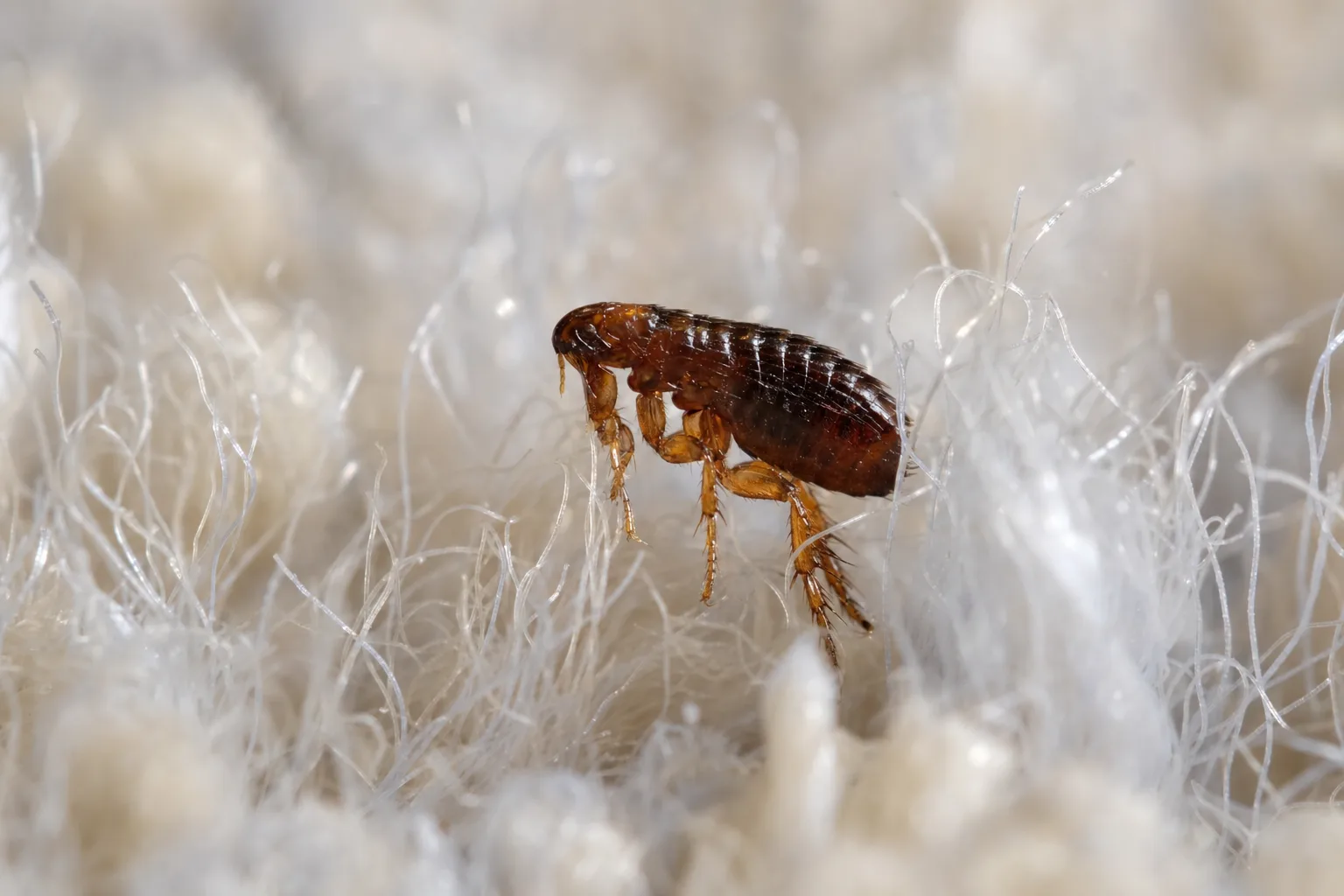
Fleas are tiny insects flattened from side to side, about 1–4 mm long, dark brown and wingless, but excellent jumpers. The species most often found in apartments is the cat flea, which readily attacks dogs and people as well. Adult fleas live mainly on the animal, but the eggs, larvae and pupae — that is, most of the population — develop in carpets, floor cracks, pet beds and upholstery.
Fleas or something else?
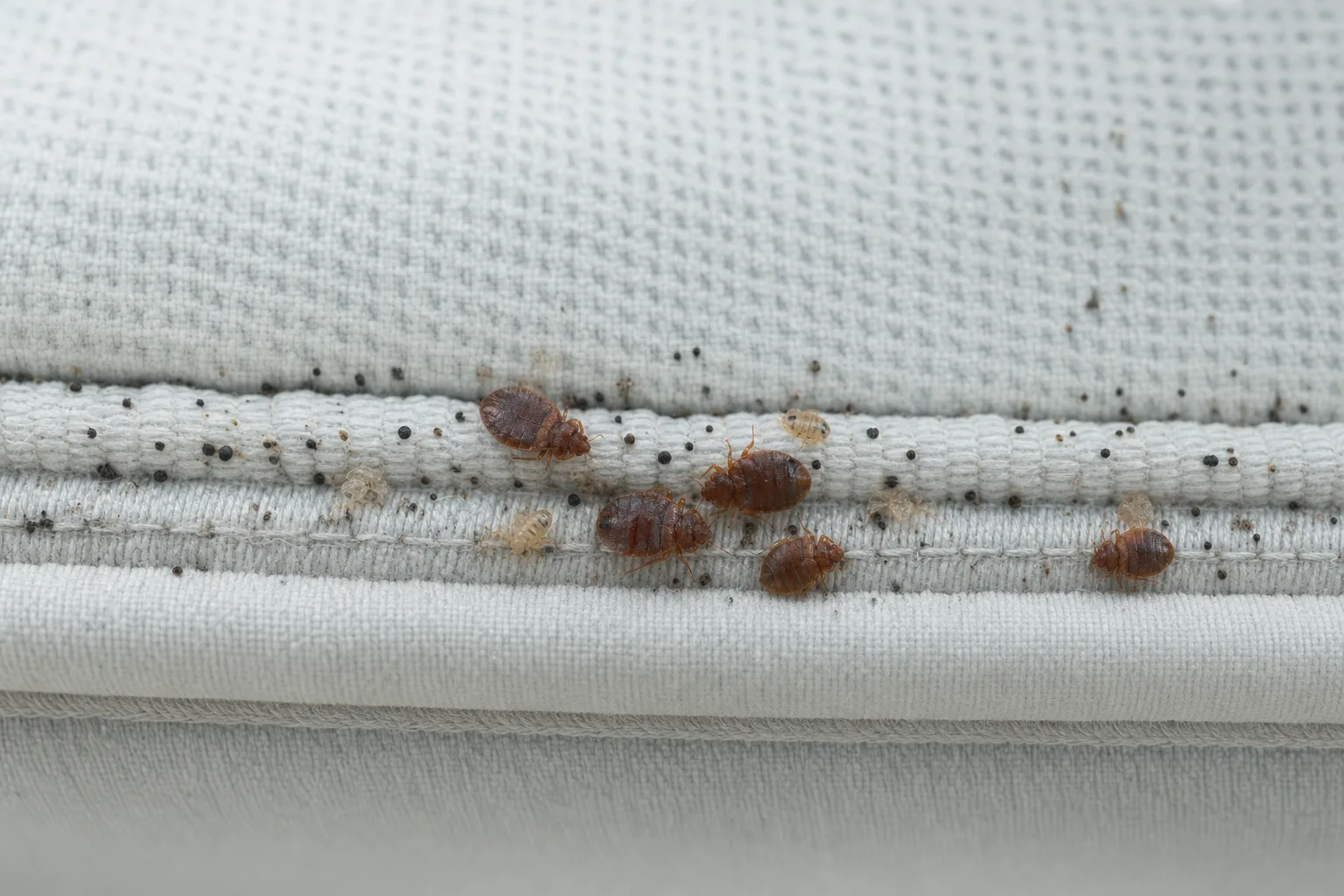
- Bed bugs — bites in a row on the arms and neck, spots on the bedding, the insects don’t jump. See bed bug control.
- Springtails — very small, pale and jumping — but they don’t bite; they appear where it’s damp, e.g. in flowerpots and the bathroom.
- Mosquitoes and black flies — single bites on exposed skin, seasonal, no insects in the carpet.
- Scabies or an allergy — no insects and no droppings; if in doubt, send us a photo of the bites or the insect on WhatsApp.
Do fleas bite people, and what are the risks?
Yes — cat and dog fleas readily bite people, especially when there’s no animal left in the apartment or the population is large. The bites itch intensely, cause allergic reactions in some people, and can become infected when scratched. In animals, fleas cause allergic dermatitis and can transmit tapeworm, so after the treatment it’s worth talking to your vet about deworming.
Fleas in an apartment with no pets are a common situation after a move. The previous tenants had a cat or a dog, the apartment stood empty, and the pupae waited in their cocoons in the gaps of the parquet and in the carpeting. When new residents move in, the vibration of footsteps and body heat wake the hungry fleas all at once — hence the sudden wave of bites in the first weeks. Other sources can be basements where feral cats or rodents live, and pigeons nesting on the balcony, the windowsill or in the attic. Pigeon nests harbor bird fleas and pigeon ticks, which can move into apartments at night. In that case a treatment in the apartment alone is not enough — the nest has to be removed and the balcony secured.
The biggest problem is the hidden part of the population. Only a small percentage of fleas live on the animal — the rest are eggs, larvae and pupae in the surroundings. So just putting drops on your cat or dog doesn’t clear the problem from the apartment, and fleas can keep coming back for weeks.
- Eggs per female
- up to several dozen a day
- Egg → adult development
- usually about 3–8 weeks
- Pupa in a cocoon
- can wait for weeks, even several months
- Adult flea without a host
- usually from a few days to about 2 weeks
How to get rid of fleas in your apartment — method and products
Effective flea control requires action in two places at once: in the apartment and on the animal. We take care of the apartment — floors, carpets, upholstery, cracks and the places where the animal sleeps. At the same time, your pets should get an anti-flea product chosen by a vet (drops, a tablet or a collar). Without that, fleas from the cat or dog will quickly reinfest the apartment.
We use only biocides authorized for sale in Poland and the EU, dosed according to the label — including products with an insect growth regulator, which inhibits the development of eggs and larvae. You’ll find the details of the service on the disinfestation page.
- Questions and inspectionWe ask about pets, the basement, the balcony and the previous tenants, and check the floors, pet beds and upholstery.
- Spraying for fleasA residual insecticide on carpets, wall-to-wall carpeting, baseboards, floor cracks and under furniture.
- Upholstery and pet bedsWe treat sofas, armchairs and the areas around pet beds, where most of the larvae develop.
- ULV foggingMicrodroplets reach places that spraying can’t. 4-hour re-entry time after the treatment.
- Recommendations and the next appointmentWe explain how to vacuum between visits and book the second treatment.
How many flea treatments are needed?
Usually 2 treatments 10–14 days apart, sometimes 3. The reason is the pupae: flea larvae seal themselves in cocoons that are resistant to insecticides and can wait for weeks until the vibration of footsteps or the warmth of an animal wakes them. The second treatment kills the fleas that hatched from the cocoons after the first visit.
Fleas in carpets and wall-to-wall carpeting are the hardest case: the larvae burrow deep between the fibers to avoid light, and the cocoons get coated in dust and are practically invisible. That’s why we spray carpets especially thoroughly, and between visits we ask you to vacuum every day. Every pass of the vacuum signals to the pupae that a host is nearby — the fleas leave their cocoons and land on treated surfaces instead of waiting for the next opportunity.
With a small problem, and with the pets treated at the same time, two visits are often enough. With a large population, in a home with several animals, or when fleas are coming from the basement, we recommend three. The guarantee applies after a series of 3 treatments at the recommended intervals.
How to prepare your apartment for flea disinfestation
- Make a vet appointment for your pets and apply an anti-flea product no later than the day of the treatment.
- Thoroughly vacuum floors, carpets, upholstery and baseboards — and immediately dispose of the bag or the canister contents outside the apartment.
- Wash pet beds, blankets, bedding and bedspreads at min. 60°C.
- Pick up toys, clothes and small items from the floor so the whole surface is exposed.
- Protect food, dishes and the aquarium.
- Plan for 4–5 hours away from home for everyone in the household, pets included.
What to do after the flea treatment
- Come back after 4 hours and air out the apartment for 30–60 minutes.
- Vacuum every day for about 2 weeks — the vibration wakes fleas from their cocoons and exposes them to the insecticide.
- Don’t wet-clean floors and carpets for about 2 weeks, so you don’t remove the insecticide.
- Seeing an occasional flea in the first days after the treatment is normal — these are fleas emerging from their cocoons.
- Keep up your pets’ flea protection as your vet recommends.
How much does flea disinfestation cost in Warsaw?
The price depends on the floor area, the type of flooring, the number of pets and the scale of the problem. We give you the price before the visit.
| Studio apartment | quote before the visit |
|---|---|
| 2–3 room apartment | quote before the visit |
| House | quote before the visit |
| Commercial space / business | custom quote |
Guarantee — what if the fleas come back?
After 3 treatments at the recommended intervals, the guarantee applies: if fleas reappear within 6 months of the third treatment, we come back free of charge.
Following our recommendations also affects the results, especially keeping your pets on continuous flea protection. If the fleas are coming from the basement, the attic or pigeons on the balcony, we’ll point out the source and help you work out the next steps with the building manager.
Customer reviews
Average company rating: 5.0 / 5 from 145 reviews (Google 93, Oferteo 37, Fixly 15). The reviews come from the company’s profiles on these sites. All reviews
Frequently asked questions about fleas and flea disinfestation
How do I get rid of fleas in my apartment?
You need three things at once: a treatment in the apartment (spraying floors, carpets and cracks), an anti-flea product for your pets from the vet, and daily vacuuming between visits. We usually do 2 treatments 10–14 days apart.
Where do fleas come from in an apartment with no pets?
Most often they are left behind by the previous tenants and their pets — pupae in cocoons can wait for weeks. They can also come from the basement or from pigeons nesting on the balcony and in the attic; pigeon nests also harbor fleas and pigeon ticks, which move into apartments.
How many flea treatments are needed?
Usually two, 10–14 days apart, sometimes three. Pupae in cocoons are resistant to insecticides, so the second treatment kills the fleas that hatched after the first one.
Do fleas bite people?
Yes. Cat and dog fleas bite people, most often on the ankles and calves. The bites itch intensely and can cause an allergic reaction.
Do I need to protect my cat or dog?
Yes, it’s a condition for the treatment to work. Your pets should get an anti-flea product chosen by a vet, and because of the risk of tapeworm, it’s worth asking about deworming as well.
How long do fleas live without a host?
An adult flea without a blood meal usually survives from a few days to about 2 weeks. Pupae in cocoons wait much longer — weeks, or even several months.
Does vacuuming help with fleas?
It helps, but it’s not enough on its own. Vacuuming removes some of the eggs and larvae, and the vibration wakes fleas from their cocoons so they come into contact with the insecticide — that’s why we recommend vacuuming every day after the treatment.
 Bed bugs
 Moths
 German and Oriental cockroaches